
You have probably heard that quantum computers will change everything. Some of that is true and some is hype. This guide explains the basics without any maths.
From bits to qubits
An ordinary computer stores information in bits, which are always either 0 or 1. Every photo, message and app on your phone is ultimately a long list of 0s and 1s.
A quantum computer uses qubits. A qubit can be in a blend of 0 and 1 at the same time, called superposition. Qubits can also be linked through entanglement, so that the state of one is connected to the state of another. When you measure a qubit, you always get a plain 0 or 1.
Not simply a faster computer
A common myth is that a quantum computer tries every possible answer at once and picks the right one. It does not. A quantum program is designed so that wrong answers cancel each other out and right answers are reinforced, a bit like waves in water that can add up or flatten each other. This effect is called interference.
The trick only works for certain kinds of problem. For everyday tasks such as email, video or spreadsheets, an ordinary computer is faster, cheaper and better.
What quantum computers could be good at
- ◆Simulating nature: molecules and materials follow quantum rules, so a quantum computer can model them more naturally. This could help design medicines, batteries and fertilisers.
- ◆Breaking some encryption: a large quantum computer could break RSA and elliptic-curve encryption, which is why the world is moving to post-quantum cryptography.
- ◆Some maths and search problems: certain problems get a speed-up, though often a smaller one than headlines suggest.
Where the technology is today
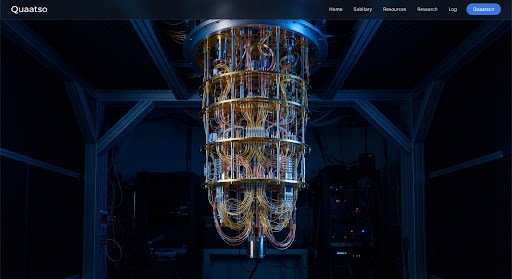
Today’s machines have from a few dozen to around a thousand physical qubits, and they make frequent errors. Qubits are fragile: heat, vibration or stray signals can disturb them in a fraction of a second. Many machines are cooled to temperatures colder than outer space to keep their qubits stable.
The big goal is error correction: combining many physical qubits into fewer, more reliable “logical” qubits. In December 2024, Google showed that its Willow chip could reduce errors as it used more qubits, an important step. Large, useful machines are still years away.
Why it matters to you now
Even though big quantum computers don’t exist yet, they already affect planning. Encrypted data stolen today could be decrypted later, and new quantum-safe encryption standards were published in 2024. Understanding the basics helps you separate real progress from hype.
task_altKey takeaways
- check_circleQubits use superposition, entanglement and interference; they don’t “try every answer at once”.
- check_circleQuantum computers will help with specific problems, not everyday computing.
- check_circleToday’s machines are small and error-prone; error correction is the key milestone.